
.jpg)
Hantavirus Panic on the High Seas
The haunting memories of the COVID-19 pandemic returned this week as the luxury expedition cruise ship MV Hondius became the centre of an international public health emergency after a deadly outbreak of hantavirus was detected among passengers and crew.
What began as an elite Antarctic voyage has now transformed into a grim reminder of how quickly infectious diseases can cross borders in an interconnected world.
Health authorities across Europe, the United States, South Africa and Latin America are scrambling to trace passengers after multiple infections linked to the Andes strain of hantavirus — one of the rare variants capable of human-to-human transmission — were reported aboard the vessel. According to international reports, at least three passengers have died while several others remain under observation in specialized isolation units.
The outbreak has triggered global concern not merely because hantavirus is dangerous, but because cruise ships once again appear vulnerable to becoming floating incubators of disease.
The ship departed from Ushuaia in Argentina in early April carrying passengers from more than twenty countries on an expedition across Antarctica and remote Atlantic islands. Somewhere along the route, the virus silently spread. By the time fatalities began occurring, the vessel had already become a logistical and medical nightmare.
Unlike common respiratory viruses, hantavirus is generally associated with exposure to rodent droppings and contaminated environments. However, the Andes strain detected in this outbreak is particularly alarming because scientists acknowledge limited human-to-human transmission is possible through close contact. The World Health Organization and health agencies are now conducting intensive contact tracing operations across several nations.
The crisis exposed serious weaknesses in maritime medical preparedness. Reports indicate the ship’s onboard medical facilities were only equipped for routine illnesses and lacked advanced respiratory support systems required for severe viral infections. As critically ill passengers deteriorated, countries hesitated to permit docking rights, fearing wider transmission.
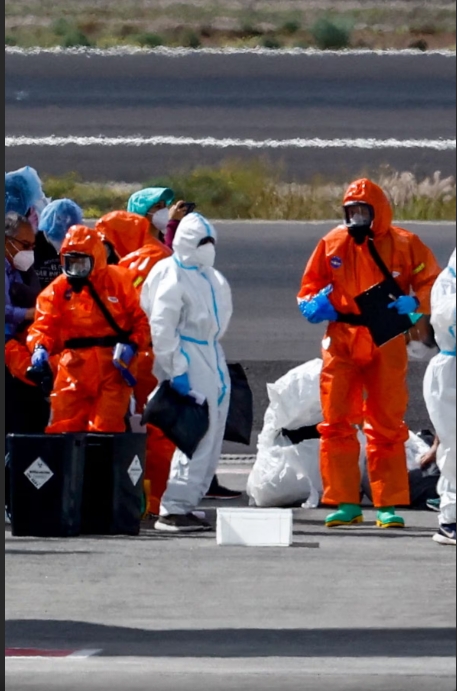
Eventually, Spain’s Canary Islands coordinated a controlled evacuation under international supervision. The United States airlifted several passengers into biocontainment facilities, while Britain even mounted a military humanitarian operation to assist an infected passenger stranded on a remote Atlantic island.
The episode highlights several urgent lessons.
First, the world remains dangerously underprepared for emerging zoonotic diseases. While governments focused heavily on influenza and coronavirus surveillance after COVID-19, outbreaks involving lesser-known pathogens continue to pose serious threats.
Second, luxury travel and adventure tourism now carry new epidemiological risks. Remote eco-tourism, wildlife expeditions and polar cruises increasingly expose travelers to unfamiliar ecosystems where dangerous pathogens circulate naturally.
Third, international coordination remains inconsistent. Delays in docking permissions and disagreements among governments reflected the same confusion witnessed during the early stages of COVID-19. Public health diplomacy must evolve faster than the pathogens themselves.
Experts insist that the overall public risk remains low, and panic is unnecessary. But complacency would be equally dangerous. Infectious disease outbreaks no longer remain confined to isolated geographies. A virus emerging from a remote wilderness can, within days, travel across oceans through tourism and aviation networks.
For India and other densely populated countries, the MV Hondius incident should serve as a warning. Strengthening airport surveillance, maritime health inspections and rapid response systems is no longer optional. Public health infrastructure must prepare not only for familiar diseases, but also for rare and emerging infections.
The tragedy aboard the MV Hondius is more than a maritime health crisis. It is another chapter in humanity’s ongoing struggle against emerging pathogens in an age of global mobility.
And once again, the world is learning that microbes do not recognize borders, passports or luxury cabins.
Advertisement


💬 Comments
Amir Zahid - 11 May 2026, 11:38 PM
Dangerous