
.jpg)
On the Brink : A World That Cannot Afford Another War
On the Brink: A World That Cannot Afford Another War
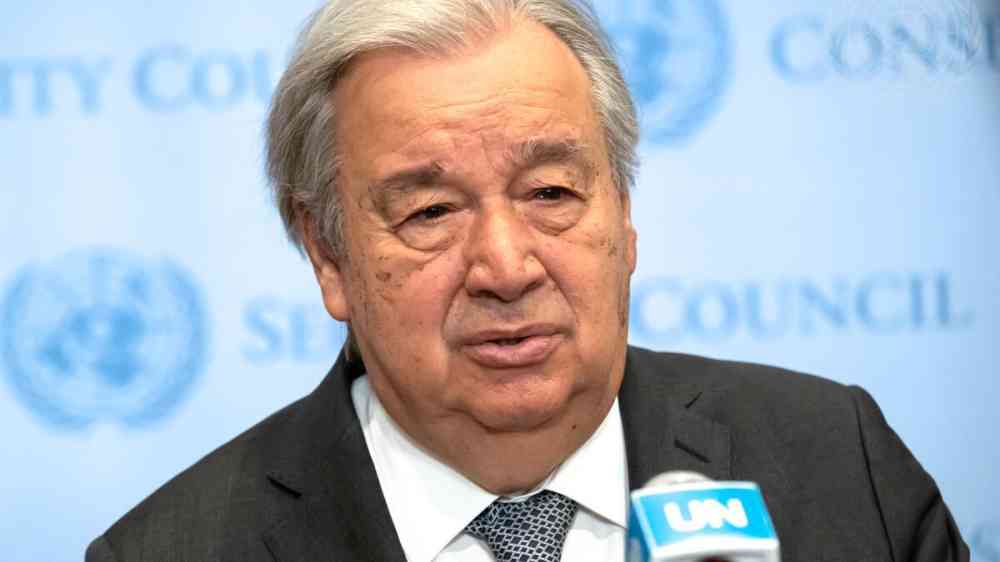
The warning issued on April 2 by United Nations Secretary-General António Guterres should not be read as routine diplomatic concern. It is, instead, a stark alarm bell for a world already strained by conflict, climate instability, and economic fragility. His message is clear: the escalating tensions in the Middle East are not a regional problem they are a global emergency in the making.
At the heart of this crisis lies the Strait of Hormuz, a narrow maritime passage that carries nearly a fifth of the world’s oil supply. Guterres’ description of the strait as “strangled” is not mere rhetoric. Any sustained disruption in this artery of global trade threatens to choke energy markets, sending oil prices soaring and triggering ripple effects across economies. For nations heavily dependent on imports, particularly in the developing world, the consequences could be devastating.
Already, the early signs are visible. Rising fuel costs inevitably translate into higher transportation and production expenses, which in turn inflate food prices. Countries such as Sri Lanka, Mozambique, and the Philippines still recovering from economic shocks and debt burdens are especially vulnerable. For millions in these regions, this is not about market fluctuations; it is about survival. A spike in food prices can mean empty plates, increased malnutrition, and social unrest.
Beyond economics lies an even graver concern: the humanitarian toll. Civilian suffering is mounting, and history has shown that once conflicts in the Middle East spiral, they rarely remain contained. The region’s complex web of alliances and rivalries makes any escalation dangerously unpredictable. What begins as localized hostilities can rapidly evolve into a broader confrontation, drawing in multiple state and non-state actors.
Guterres’ warning that the region stands “on the edge of a catastrophe” must therefore be taken with utmost seriousness. The specter of a wider war is not hypothetical it is a looming possibility. And in an interconnected world, no nation can afford to assume immunity from its consequences.
Diplomatic efforts are underway, with the UN engaging directly with key stakeholders and dispatching its Personal Envoy, Jean Arnault, to facilitate de-escalation. Yet diplomacy, to be effective, requires more than dialogue it demands political will. The parties involved must recognize that the costs of continued aggression far outweigh any perceived strategic gains.
For India, and indeed for much of the Global South, the stakes are particularly high. Energy security remains a critical concern, and any prolonged disruption in supply chains could derail growth trajectories and strain public finances. Moreover, the presence of large expatriate populations in the Gulf region adds another layer of vulnerability.
This moment calls for collective restraint and urgent action. The international community must move beyond statements of concern and actively support mechanisms that reduce tensions and protect civilians. Regional powers, too, bear a responsibility to act as stabilizing forces rather than amplifiers of conflict.
The world stands at a precarious juncture. Another prolonged war in the Middle East is not just a regional tragedy it is a global risk we cannot afford. The warning has been sounded. Whether it is heeded will determine not only the fate of a region but the stability of the world itself.
Advertisement


💬 Comments
No comments yet. Be the first to comment!